Brad M. Barber
Professor of Finance
Course Taught: Financial Theory and Policy
Research Expertise: Finance, investments and financial markets, corporate financial policy, market for corporate control, analyst recommendations, investor behavior
Consulting: Litigation support for financial fraud, antitrust, lost profits cases
Degrees
- Ph.D., Finance, University of Chicago
- MBA, University of Chicago
- B.S., Economics, University of Illinois, Urbana
Fast Facts
Internationally renowned investor behavior and finance expert whose work offers fresh insights on mutual funds, gender-related overconfidence in stock trading, reliability of stock analysts’ recommendations, and how active trading of equities is “hazardous to your wealth”
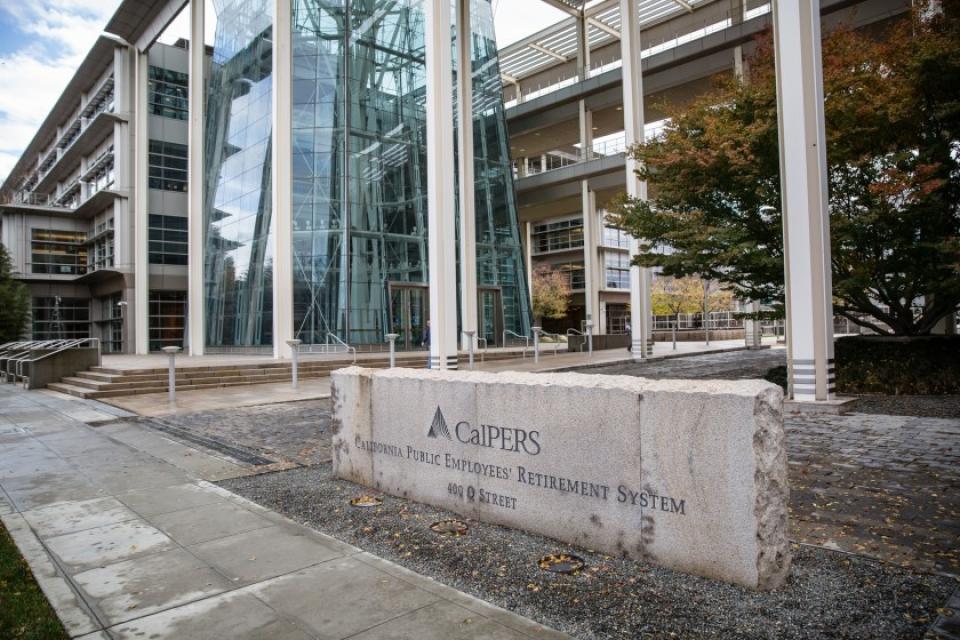
Helps students prepare for global business leadership with opportunities like the center’s fellowships at CalPERS and CalSTRS, the nation’s two largest public pension funds
Professor Brad Barber is an internationally recognized authority on investor psychology, stock analyst recommendations, online trading and mutual fund performance. His research includes the effect of expenses on money flowing into mutual funds, gender-related overconfidence in stock trading, the impact of coordinated trading by individual investors, and how active equity trading is hazardous to individual investor wealth. He is often quoted and his research has been covered extensively in the media, including Bloomberg BusinessWeek, Time, Reuters, the Wall Street Journal and the New York Times, and he has appeared on ABC News, NBC Nightly News, CNN, MSNBC and CNBC.
Barber Barber is one of the top 50 finance scholars in the world ranked by total citations. He has published groundbreaking research in leading academic journals, including the Journal of Finance, the Journal of Financial Economics, Review of Financial Studies, the Journal of Political Economy, Quarterly Journal of Economics, American Sociological Review, the Journal of Financial and Quantitative Analysis, and the Financial Analyst Journal.
Barber teaches courses in investment analysis and corporate financial policy. He is a regular speaker at academic and industry conferences.
Room 3218

10th Annual Napa Conference on Financial Markets Research
The Graduate School of Management partners with the Financial Management Association to co-sponsor this unique conference.
Financial Management is the flagship journal of FMA which seeks high quality articles that are of interest to academics, but also have the potential to influence business practice.
The Graduate School of Management is a small, intimate community of top-notch students and world-class scholars with strong ties to the California wine industry.
To reflect the unique character and focus of the school, the conference sessions take place at the Cakebread Winery located in the bucolic Napa Valley.
Suckers or saviors? Small investors buy up stocks
Fund flows offer no guide to future stock moves, says one analysis
With the Dow hovering around 14,000 as individual investors pour back in, Prof. Brad Barber says the data on investor stock flows isn’t a reliable guide to market direction. “It’s not a signal about where the market is heading,” Barber says, noting that on some occasions fund flows have peaked just as the market prepared to tank.
CalPERS launches Sustainable Investment Research Initiative
CalPERS has launched the Sustainable Investment Research Initiative aimed at advancing the pension fund’s understanding of the impact sustainability factors have on financial performance, confirmed Anne Simpson, CalPERS senior portfolio manager and director of global governance.
Why now’s not the time to sell Apple stock
If you own Apple stock, odds are good you bought it for the wrong reasons. Don’t sell it for the wrong reasons, too.
“Attention is a scarce resource. When there are many alternatives, options that attract attention are more likely to be considered,” wrote Brad M. Barber, a professor in the Graduate School of Management, University of California, Davis. There’s certainly no shortage of media coverage about Apple, which is still up nearly 30 percent for the year in spite of its recent slide.
New Bull Record in 2013 or Crash Over a Bear Cliff?
Commentary: 10-part test: Rational Investing in Irrational Markets
Finance professors Terry Odean and Brad Barber studied 66,400 Wall Street investment accounts and concluded: “The more you trade, the less you earn.” The returns of passive investors (2% annual turnover) actually beat active investors (258% turnover) by 50%.
Individual investors are destroying their wealth
Commentary: 7 sins that individual investors commit
MarketWatch draws upon a 2011 study by Brad Barber of UC Davis and his colleague Terrance Odean of Berkeley on individual investors’ behavior to identify the 7 deadly sins that individual investors commit.
Brad Barber
Professor of Finance / Maurice J. and Marcia G. Gallagher Chair in Finance / Director, Center for Investor Welfare and Corporate Responsibility
State Pension Funds Sticking with JPMorgan Despite $2B Loss
This article, about the plans of state pension funds CalPERS and CalSTRS to stick with JPMorgan Chase even after its recent $2 billion loss, cites Professor Brad Barber, who has studied CalPERS shareholder activism in his research.
“So Many Hidden Numbers”: How Advisors Give Their Clients the Vampire Treatment
This article, about how broker fees can hobble a retirement portfolio, cites Professor Brad Barber’s study with UC Berkeley’s Terrence Odean, “Trading Is Hazardous to Your Wealth.”
Why We Need More Female Traders on Wall Street
This article cites Professor Brad Barber’s research that analyzed account data for more 35,000 households at a large discount brokerage and showed that on average men were worse stock traders than women.
Gender Differences in Investing: Shifting the Financial Services Industry
Why are men more willing to take risks when it comes to investing?
Why are men more willing to take risks when it comes to investing? Empirical observations conclude that men have a greater appetite for risk. Studies on investor behavior indicate that men are more tolerant of risk than women. For example, studies indicate men allocate a greater proportion of their investment portfolio to stocks rather than bonds. What-is-more, the stocks men choose tend to be riskier (more volatile with greater market risk). All of this suggests that men are more comfortable taking on higher risk. We do not yet understand whether these differences in risk appetite between the genders can be traced to nature or nurture. Are women innately more cautious than men or do environmental factors govern these differences. This question remains an area of ongoing research, and, though the jury is still out, I suspect both nature and nurture are important factors.
Gender Differences in Investing:
Shifting the Financial Services Industry
Why are men more willing to take risks when it comes to investing? Empirical observations conclude that men have a greater appetite for risk. Studies on investor behavior indicate that men are more tolerant of risk than women. For example, studies indicate men allocate a greater proportion of their investment portfolio to stocks rather than bonds. What-is-more, the stocks men choose tend to be riskier (more volatile with greater market risk). All of this suggests that men are more comfortable taking on higher risk. We do not yet understand whether these differences in risk appetite between the genders can be traced to nature or nurture. Are women innately more cautious than men or do environmental factors govern these differences. This question remains an area of ongoing research, and, though the jury is still out, I suspect both nature and nurture are important factors.
Alpha Traders: Mama’s Boys or Daddy Killers?
This article cites Professor Brad Barber’s research which showed that active trading is really a loser’s game. “Their bottom line: ‘The more you trade the less you earn.’ Buy-and-hold investors in their research turned over their portfolios just two percent a year. Active traders churned their portfolios an average of 258 percent annually, but their net returns were a third less than their buy-and-hold competition.”
Market Plunge? You’ve Got to Be Kidding Me
This article about the financial press cites Brad Barber’s 2000 study, “Trading Is Hazardous to Your Wealth: The Common Stock Investment Performance of Individual Investors.”
The Five Worst Investing Mistakes You Can Make
In 2010, the SEC asked the Library of Congress to produce a list of the most typical ways investors shoot themselves in the foot. This article cites Brad Barber’s research that found active traders have lower returns.
Wealth Management: 7 Things You Don’t Know about Women Investors
This article cites Professor Brad Barber’s research, which showed that men’s investment portfolios tended to suffer from their overconfidence.
CalPERS Set to Lower its Investment Forecast, Pushing State Cost Up
This article about the recent investment forecast released by the state employees pension fund, CalPERS, quotes Professor Brad Barber, who in 2006 authored a study evaluating CalPERS shareholder activism.
Professor Brad Barber, Finance
"What I’ve been most proud of is probably the way in which our students navigate those career objectives after leaving UC Davis..."
Professor Brad Barber, an internationally recognized expert in investor behavior, talks about the success students find with a UC Davis MBA. He says, “What I’ve been most proud of is probably the way in which our students navigate those career objectives after leaving UC Davis. I think they’re infused with a sense of community, cooperation and teamwork which makes our graduates attractive to potential employees and also as managers.”
10 Reasons Wall Street Will Hit Bottom, Crash
Professor Brad Barber’s research that showed trading is hazardous to your wealth makes one reason why Wall Street will hit bottom, according to this article from MarketWatch.
Brad M. Barber Awards
Why Women Are Better Investors than Men
Arguing that women investors almost always outperform their male counterparts, this article cites Professor Brad Barber’s research on gender as it relates to investment overconfidence.
Investing Problems: Men, Overconfidence and Trading
This article cites Professor Brad Barber’s research with Terrance Odean which showed how mens’ overconfidence leads to too much trading, which results in lower returns. “Barber and Odean found that while both men and women were hurt by excessive trading, for men the damage was worse, with men reducing their net returns by about 1 percentage point more a year than women.”
Corporate Governance-20 Years Old and Time for a Re-think
This article about corporate governance cites Professor Brad Barber’s research on the California Public Employees Retirement System (CalPERs).
Investors Behaving Badly: Overconfidence
This article cites Professor Brad Barber’s research about investor overconfidence. From 1991-1996, Barber and co-author Terrance Odean set upon a study of more than 66,000 households with brokerage accounts to look for a pattern of overconfidence in common stock purchases. Their hypothesis was that overconfident investors would tend to turn over their portfolios more frequently than those who were less confident.
The Consumer Financial Protection Bureau Should Tell Investors to Trade Less
This article about the new Consumer Financial Protection Bureau cites Professor Brad Barber’s 2000 study “Trading is Hazardous to Your Wealth: The Common Stock Investment Performance of Individual Investors” in which he and co-author Terrance Odean from U.C. Berkeley looked at 10,000 investor accounts and found that the average retail trading decision is usually ‘wrong’ over the course of the following year.
Risk Bites Back: Lessons Learned from the Harvard Endowment
The success of Harvard’s endowment in recent decades helped popularized a new approach to university endowment investing that generated enormous gains. But when the 2008 financial crisis hit, Harvard’s fund took a bath and exposed weaknesses in its asset management approach. Harvard’s experience offers lessons for financial advisors increasingly interested in alternative investments. Professor Brad Barber’s latest research is cited in the article.
Alternatives Explain Endowment Superiority, Academic Paper Says
Asset allocation and investing in alternatives more specifically are the main reasons for success at elite endowments, according to a new paper co-written by Professor Brad M. Barber and Guojun Wang of UC Davis.
Tight Budgets, Wild Markets Hurt Investment Clubs
Not that long ago, it seemed like everyone belonged to an investment club. People would gather at a friend’s house, share a few bottles of merlot and toast their soaring investments in Cisco and JDS Uniphase. And now? Not so much. In this article, Professor Brad Barber’s study “Too Many Cooks Spoil the Profits” is cited, suggesting that getting a bunch of investors together doesn’t tend to improve returns.
Do (Some) University Endowments Earn Alpha?
Using data from 1991 to 2010, U.C. Davis Professors Brad Barber and Guojun Wang analyze educational endowment returns using simple style attribution models pioneered by Sharpe (1992).
Don’t Blink! The Hazards of Confidence
This article cites Professor Brad Barber’s recent research showing that, on average, the most active traders had the poorest results, while those who traded the least earned the highest returns. In another paper, “Boys Will Be Boys,” Barber and colleague Terry Odean reported that men act on their useless ideas significantly more often than women do, and that as a result women achieve better investment results than men.
Behavior of Individual Investors: To Err Is Human
This article reports Professor Brad Barber’s latest research, conducted with Terrance Odean of UC Berkeley’s Haas School of Business, which finds that individual investors do not behave rationally, as economic theory would suggest. The bottom line: “Investors who don’t know they perform poorly end up believing that they’re doing well — the incompetent are unaware.”
Trading the World Away … the Rot at the Core of Markets
Day traders generally trade too much and take too many risks.
This article cites a 2006 study led by Professor Brad Barber that analyzed the trading record for Taiwan’s stock exchange for four years in the 1990s. They found that, in a typical six-month period, “more than eight out of 10 day traders lose money” and that total losses were staggering: 2.2 percent of Taiwanese GDP annually.
The Behavior of Individual Investors
In this study, Professor Brad Barber and co-author Terrance Odean from U.C. Berkeley provide an overview of research on individual investor stock trading behavior.
Introducing Our New UC Davis MBA Curriculum
We are strengthening our internationally ranked UC Davis MBA program by launching a new, innovative curriculum this fall that further integrates globalization, responsible business ethics and sustainability.
New MBA Curriculum Designed to Prepare Innovative Leaders for Global IMPACT
Enhancements build on core strengths of values-based leadership, teamwork skills and turning ideas into action to solve strategic business issues
In the aftermath of the global financial crisis and recession, calls for change at business schools have come from every corner. Employers say they want MBAs who are creative and collaborative, and who can step in as leaders their first day on the job. Students say they want to learn to think strategically, work in teams and tackle issues that affect real businesses. Society demands that business school graduates have grounding in social responsibility, accountability and ethics.
Why Market Timing Is a Joke
This Motley Fool article mentions research by Professor Brad Barber and Terrance Odean of UC Berkeley that concludes that “trading is hazardous to your wealth.”
Personal Finance: Don’t Panic, Hang in There
Professor Brad Barber's research discusses the wisdom of patience in today's market.
For many investors watching their retirement accounts, it’s nerve-wracking. Many are bailing out of stocks and into bonds. Some are grasping for gold as a tangible nugget of safety. Others are wondering if they’re better off in CDs and money-market funds. Regardless, the advice from most investment advisers is consistently the same: Don’t panic. Hang in there. Brad Barber is cited in this article discussing why the long-term view is most important when it comes to investment planning.
Don’t Panic, Hang in There, Advisers Tell Investors
For many investors watching their retirement accounts, it’s nerve-wracking. Many are bailing out of stocks and into bonds. Some are grasping for gold as a tangible nugget of safety. Others are wondering if they’re better off in CDs and money-market funds. Regardless, the advice from most investment advisers is consistently the same: Don’t panic. Hang in there. Brad Barber is cited in this article discussing why the long-term view is most important when it comes to investment planning.
Anxiety the Norm for Younger Investors
The notion that investing can make you rich looks laughable when you see stock markets tank as they have in the past two sessions. And for the youngest of investors, who have already experienced the tech bubble burst in 2000 and the 2008 market crash, bewilderment and anxiety has become more the norm than the exception. Professor Brad Barber is cited, explaining the fears and motivations behind young investors.
Investors Driven by Emotion, Not Facts
New research by Professor Brad Barber shows regret affects the repurchase of stocks previously sold
Due to regret, investors are most likely to repurchase a stock sold for a gain that is trading below the price at which they sold it. Individuals investing in stocks let their emotions guide them more than facts, often to their financial detriment, a new UC Davis study finds.
UC Davis MBA Students First to Hear Groundbreaking Research by Internationally Renowned Experts
(Davis, CA) — UC Davis MBA students are the first to hear groundbreaking research by internationally renowned experts such as Professor Brad Barber. His work offers fresh insights on the effect of expenses on mutual fund investments, gender-related overconfidence in stock trading, reliability of stock analysts’ recommendations and how active trading of equities is “hazardous to your wealth.”
The Center for Investor Welfare and Corporate Responsibility
The Center for Investor Welfare and Corporate Responsibility advocates for improved corporate practices, educates investors through research and outreach, and better prepare MBA students for today’s global business arena.
Directed by finance Professor Brad M. Barber, an internationally renowned expert on investor psychology and investing, the center draws on the expertise of Graduate School of Management faculty engaged in research related to investor welfare, corporate fraud, white-collar crime, corporate ethics and social responsibility.
Below is a selection of recent releases and research citations in the news.
205 Financial Theory and Policy
Covers the fundamental principles of corporate financial management and capital markets. Major topics include general valuation methods for risky cash flow streams, capital budgeting, asset pricing models, risk management, equity financing, debt financing and dividend policy.
Why Many Fail at Investing
The Motley Fool looks at why so many investors perform badly in the market, citing professor Brad Barber’s research on the topic.
Rising Tide of Gold Scams
Investors are scrambling to join the gold profit party, and precious metals scams have begun to snowball. Professor Brad Barber discusses the motivations and risks behind this sudden gold rush.
MBA Consulting Center in Action: Brocade
The GSM recently had the opportunity to partner up with Brocade on a specially tailored three-month project for Brocade’s treasury group. Students were tasked with developing a new theoretical methodology to explore prioritization and risk mitigation investment. See the video for a look at the full experience.
Get Out of the Way of Your Own Investing Success
Professor Brad Barber advises investors about the pitfalls of trading too frequently.
How Gender Divides Investment Behaviour
The Calgary Herald cited Professor Brad Barber in an article about the distinct differences in the investment behavior of men and women. Driven less risky philosophy women often build a more conservative, less volatile portfolio which pays off over the long haul.
Money Management: Battle of the Sexes
Professor Brad Barber’s research study, “Boys Will Be Boys: Gender, Overconfidence, and Common Stock Investment” appeared in MIT’s Quarterly Journal of Economics. Looking at patterns across 35,000 households, Barber and co-author Terrance Odean determined that male investors traded stocks about 50 percent more often than women investors, with their market timing efforts resulting in poorer returns and more frequent fees and charges.
Who Are the Worst Investors?
CBS Moneywatch cites Professor Brad Barber’s series of groundbreaking studies on investor behavior and its impact on investment returns.
Why You Shouldn’t Pay Off Your Mortgage
CBS MoneyWatch cites UC Davis GSM Finance Professor Brad Barber: “When you own both a mortgage and a stock portfolio, you’re acting like a hedge fund. You’re playing the market with borrowed money.”
Why Retail Investors Still Avoid Stocks
Major U.S. stock indexes have returned 80% or more since their 2009 lows, but individual investors remain wary. Investor psychology expert and Professor of Management Brad Barber discusses why.
CBS/Springfield, Mass. Money Watch
Professor Brad Barber is featured in this story about women and investments. Barber’s research has suggested that women are better investors than men due to more conservative trading practices.
Why Women Are Better Investors
Conservative investment practice and male overconfidence are aspects Professor Brad Barber’s research that suggest women are better investors than men overall. Barber surveyed over 35 thousand households and found that men traded 45% more often than their female counterparts.
Portfolio Envy – Why Her Portfolio is Better Than His
Professor Brad Barber’s ground-breaking investment practice research delves into why women outperformed men in investments. Barber’s findings reveal that women’s risk-adjusted returns outpaced men by 1% annually, suggesting that the testosterone factor, a natural urge to best the other guy, is actually more detrimental to men than beneficial.
The Dangers of Confident Investing
What causes amateurs to mistake themselves for Warren Buffett when they’re probably closer to Jimmy? One famous investigation of this phenomenon, by Brad Barber of the University of California, Davis, and Terrance Odean of the University of California, Berkeley, looked at the behavior of investors in the 1990s, just as many were jumping into online trading. “Barber and Odean cite several factors behind this change: Most notably, the investors attributed their successes to their own skill and believed they had more control over their stocks performance than they really did.
Your Mind Your Money – Investment Traits
GSM Professor of finance Brad Barber participates in a video segment explaining the various affects of various traits on investment behaviors. “We came in thinking that men would trade more aggressively than women.,” Barber said. Barber’s study found that men traded 50% more frequently than women. “So, that’s consistent with this notion that men are more over confident than women.”
CalPERS Loan Sought by Schwarzenegger Likely ‘very expensive,’ Analysts say
Graduate School of Management Professor Brad Barber says of Gov. Schwarzenegger’s plan to borrow from CalPERS pension funds to help bridge state’s budget deficiit: “It may be politically expedient. It may be easier to get it out of CalPERS than it is to raise taxes or cut programs.”
Portfolio Strategy Fund Traders Are From Mars
Forbes cites study published in the MIT Quarterly Journal of Economics by Professor Brad Barber, showing that the more often investors trade, the worse they do.
Surprise: Fund Fees Hold Steady Amid Market Rally
Investing experts believe that many people are overpaying for mutual funds management and other investment advice. Brad Barber, finance professor and expert on investor behavior at the University of California, Davis provides his insight.
Why Bargain Trades Are No Bargain
Forbes cites a study by Professor Brad M. Barber and UC Berkeley’s Terrance Odean that found that investors who traded frequently earned a lower average annual return than buy-and-hold investors.
Overconfidence Hurts Male Investors
A study co-authored by Professor Brad Barber found that men trade stocks nearly 50% more often than women, driving up costs and lowering returns.
Business Executives to Debate Health Care Reform
UC Davis Management Professor Brad Barber will moderate a panel of business executives involved in the health care and insurance industries as they discuss the economic issues underlying federal health care reform at 6 p.m. in Gallagher Hall.
(, November 3, 2009)
Systematic Noise
Journal of Financial Markets, 2009
In this paper, Professor Brad Barber and co-authors Terrence Odean from the University of California, Berkeley and Ning Zhu from the Shanghai Advanced Institute of Finance analyze trading records for 66,465 households at a large discount broker and 665,533 investors at a large retail broker to document that the trading of individuals is highly correlated and persistent.
Aggressive Trading Likely Leads to Large Losses
The Review of Financial Studies, 2009
As more and more people invest to save for college educations and their retirements, research shows that aggressive trading in these accounts can lead to large losses. Professor Brad Barber has published “Just How Much Do Individual Investors Lose by Trading?” in The Review of Financial Studies in collaboration with Y-Tsung Lee of National Chengchi University, Y-Jane Liu of the Guanghua School, Peking University and National Chenggchi University, and Terrance Odean of the Haas School of Business at the University of California, Berkeley.
Professor Barber Honored with Gallagher Chair in Finance
(Davis, CA)—Professor Brad Barber, an internationally recognized expert in behavioral finance, asset pricing and investor psychology, has been named the first recipient of the Maurice J. and Marcia G. Gallagher Chair in Finance.
An endowed chair is one of the highest honors that can be bestowed in academia. It provides critical funding for research activities and has a direct influence on the contribution the Graduate School of Management can make to the business world and to management education.
Barber Helps Campus Understand the Economic Crisis
Former Federal Reserve Chairman Alan Greenspan has called the current global financial crisis a “once-in-a-century” event. To help put the economic turmoil in historical perspective and shed light on market behavior over the long term, Professor Brad Barber joined a panel of UC Davis faculty experts at “Understanding the Financial Crisis,” an October 17 forum hosted by the UC Davis Institute of Governmental Affairs.
Monitoring the Monitor: Evaluating CalPERS’ Shareholder Activism
The Journal of Investing, 2007
For almost two decades, the California Public Employees’ Retirement System (CalPERS), the nation’s largest public pension fund with more than $207 billion in assets, has been active in pursuing corporate reforms. CalPERS is generally credited as a founder of shareholder activism stemming from its heightened proxy voting activity at companies in the mid-1980s.
Avoiding Investor Self-Sabotage
Psychological traits that serve us well in everyday life may be counterproductive when it comes to sound investing. Professor Brad Barber, an expert in investor psychology, will discuss these potentially troublesome traits in the first Policy Watch lecture of the 2007-08 academic year, on October 17.
Barber Wins Award for Socially Responsible Business Research
The 2006 Moskowitz Prize for Socially Responsible Investing has been awarded to Professor Brad Barber, director of the UC Davis Center for Investor Welfare and Corporate Responsibility, for his study that explores the motivation and impact of institutional activism by reviewing the stocks on CalPERs Focus List from 1992-2005.
Is the Aggregate Investor Reluctant to Realise Losses? Evidence from Taiwan
European Financial Management, June 2007
In this study, Professor Brad Barber and co-authors Terrance Odean from U.C. Berkeley, and Yi-Tsung Lee and Yu-Jane Liu from National Chengchi University ask whether the typical investor and the aggregate investor exhibit a bias known as the disposition effect, which is the tendency to sell investments that are held for a profit at a faster rate than investments held for a loss.
Barber Wins 2006 Moskowitz Prize for Socially Responsible Investing
Professor Brad Barber’s study, “Monitoring the Monitor: Evaluating CalPERS’ Shareholder Activism,” has won the 2006 Moskowitz Prize, awarded by the Center for Responsible Business at UC Berkeley’s Haas School of Business. The winning is available online.
All that Glitters: The Effect of Attention and News on the Buying Behavior of Individual and Institutional Investors
European Finance Association Moscow Meetings, 2005
In this study, Professor Brad Barber and co-author Terrance Odean from UC Berkeley confirm the hypothesis that individual investors are net buyers of attention-grabbing stocks, e.g., stocks in the news, stocks experiencing high abnormal trading volume, and stocks with extreme one day returns.
Trading is Hazardous to Your Wealth: The Common Stock Investment Performance of Individual Investors
Journal of Finance, 2000
Individual investors who hold common stocks directly pay a tremendous performance penalty for active trading. Of 66,465 households with accounts at a large discount broker during 1991 to 1996, those that traded most earned an annual return of 11.4 percent, while the market returned 17.9 percent. The average household earned an annual return of 16.4 percent, tilted its common stock investment toward high-beta, small, value stocks, and turned over 75 percent of its portfolio annually.
Boys Will Be Boys: Gender, Overconfidence, and Common Stock Investment
Quarterly Journal of Economics, 2000
It’s not what a man don’t know that makes him a fool, but what he does know
that ain’t so.
–Josh Billings, nineteenth century American humorist
Theoretical models predict that overconfident investors trade excessively. Brad Barber and Terrance Odean test this prediction by partitioning investors on gender. Psychological research demonstrates that, in areas such as finance, men are more overconfident than women. Thus, theory predicts that men will trade more excessively than women.