From Med School Prep to Machine Learning at Google
How one Python class changed my whole plan and led me to the UC Davis MSBA
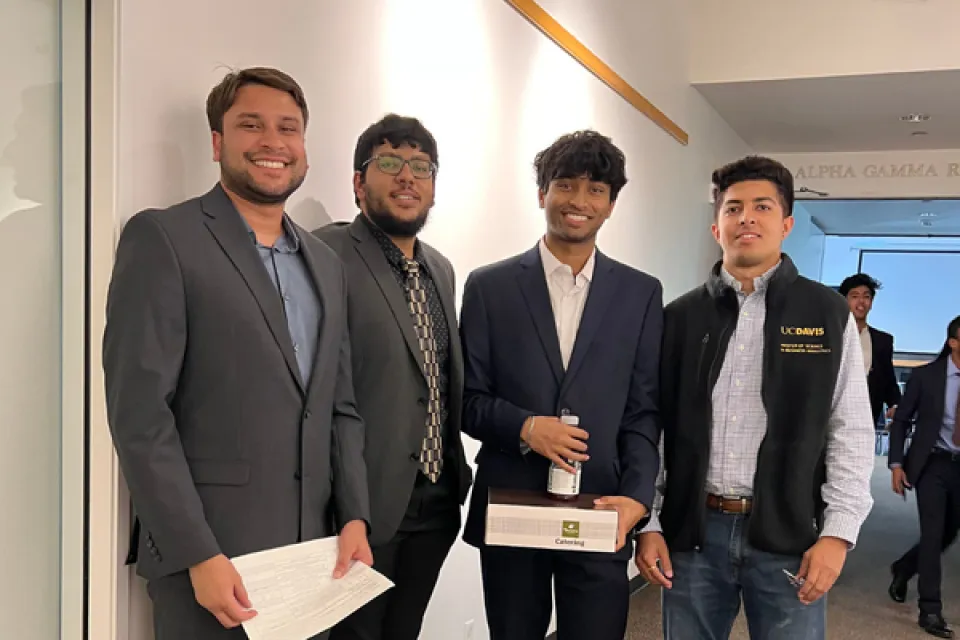
I planned on a career in healthcare my whole life. I studied biomedical engineering at San Jose State University (SJSU) and set my sights on med school. I interned at pharmaceutical companies and worked part-time to build experience. Everything I did was building toward that goal.
Then I took one course—Python for biomedical engineering.
Then I discovered coding and threw myself into it. I went deep into data science, then moved into traditional machine learning. I built my own localized writing assistant on GPT-2. By the time I graduated from San Jose State University, I had completely abandoned my plans for medical school and decided to pursue a career in technology instead.
Why Did I Choose the UC Davis MSBA Program?
I applied to the UC Davis Master of Science in Business Analytics program on a whim. The one-year format caught my attention, and the coursework covered exactly what I lacked—business acumen.
I already knew the tech. I could train a model. What I could not always do was explain why it mattered to the people paying for it. If you can’t do that, your work doesn’t get used.
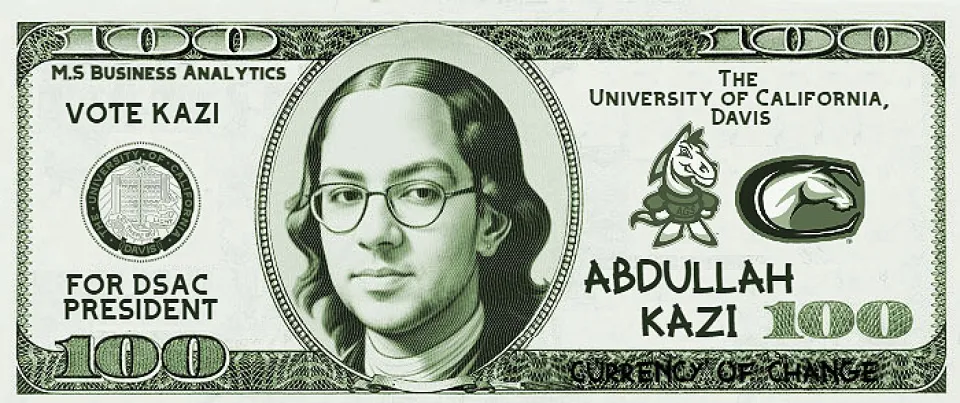
I also really broke out of my comfort zone that year. I ran for Directors' Student Advisory Committee president, printed my own campaign currency and ran as the currency of change. I won.
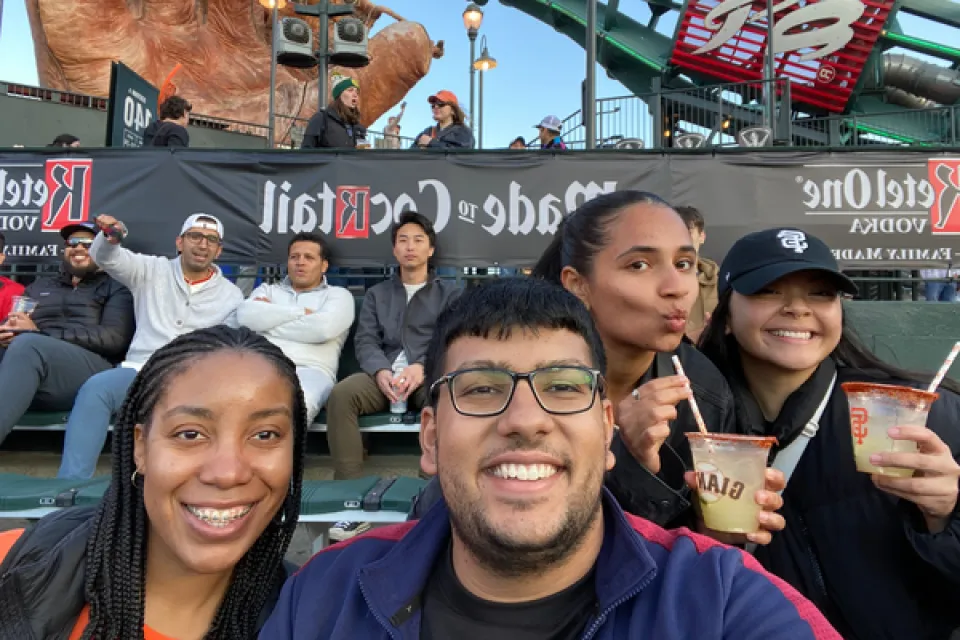
I hosted events all year, from festivals to the end-of-the-year Aggie Hacks. I saw the same people every single day and made friends I still talk to. Lifelong friends!
The Project That Changed How I Think About Analytics
My team worked with the UC Davis Pulmonary Health Clinic. The problem sounded clean: Predict which patients would arrive late, so the clinic could schedule around it and see more people in a day.
We went into the project expecting to spend most of our time building a machine learning model. Instead, we spent most of it preparing the data. Clinical records are designed to support patient care, not machine learning, so they came with missing values, inconsistent formats, and gaps where certain events were never recorded at all. Before we could train a single model, we had to clean, organize and transform the data into something an algorithm could actually use. That process ended up being the hardest and most important part of the project.
Once the data was ready, we moved on to the modeling work. We started with a logistic regression baseline, then experimented with tree-based models before ultimately training and tuning an XGBoost model. Because late arrivals were relatively rare, accuracy alone was a poor measure of performance. Instead, we evaluated the models using precision, recall, PR-AUC and time-to-event metrics.
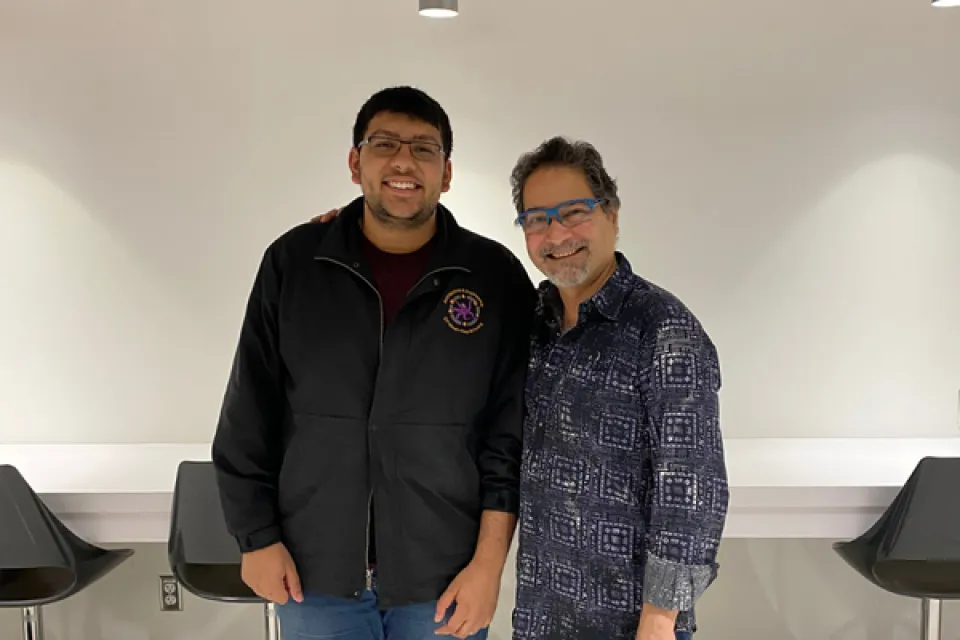
We also looked beyond overall performance by running sliced evaluations and fairness analyses. A model that influences scheduling decisions can unintentionally disadvantage certain groups of patients, so it was important to understand how performance varied across different populations. Professor Prasad Naik's Advanced Statistics and Time Series courses gave us the statistical foundation to approach the timing analysis with confidence.
The same was true for the second half of the problem. Nobody knew how long a patient was actually in the building, because nothing measured it. We proposed ways to capture it, including RFID tags that would scan each time a patient passed through a door, turning a vague sense that visits run long into a timeline you could analyze.
The practicum project changed my understanding of what analytics work really looks like.
I thought success meant building sophisticated models. Instead, I learned that much of analytics is determining whether the data, systems and processes are ready for a model in the first place. Sometimes the most valuable insight isn't the prediction. It's identifying what needs to change before meaningful predictions are even possible.
What My Practicum Project Taught Me
That lesson stayed with me long after the project ended. In interviews, I found that employers were less interested in which model I had built and more interested in how I approached a real-world problem. Being able to explain the challenges of working with clinical data, the importance of fairness and sliced evaluation and the tradeoffs behind deployment led to much deeper conversations than simply talking about model performance.
After graduating, I joined Pacific Dental Services as a senior machine learning engineer, where I spent two years building production AI systems to improve the patient experience. That work brought me back to the reason I was drawn to healthcare in the first place. I wanted to make people's lives better, because at some point, every one of us is a patient. Looking back, I've been fortunate to experience healthcare from several angles, including pharmaceuticals, clinical care and dental.
This month I joined Google as a forward deployed engineer for Google Cloud, doing the same production work I learned in my practicum project across a much broader set of industries, healthcare included.
My Advice on Whether You Should Apply to Graduate School or Not
The people who get the most out of business school are the ones who already know how to build something but have not yet learned how to explain its value to the people making business decisions. For me, the program closed that gap faster than anything else I had tried.
For the UC Davis MSBA program you need some technical grounding, though basics are enough. Wanting to learn matters more, because the pace assumes it.
Know that this is not like most coursework. Every assignment brings the analytics back to the business problem, and that is both what makes the program rewarding and what makes it challenging. Expect your practicum project to present a messy problem without a clear or obvious answer. The classes are demanding, and so are the exams. If you are pursuing the program only for the credential, you will probably find the experience frustrating. If you are genuinely curious and willing to put in the work, you will get a tremendous amount out of it.
Lastly, do not just take the classes—get involved. Run for a leadership position. Organize an event. The year moves fast, and what you build outside the classroom stays with you.
Related content

From Classmates to Co-Founders: How We Turned Group Projects into a Startup
"We noticed how naturally our strengths balanced out"

What Does an AI Engineer Do?
MSBA alumnus Kshitiz Parashar shares insights on compelling, impactful AI career path

Bridging AI, Business Analytics and Leadership
Tech investor and alumna Shilpi Sharma shares insights with MSBAs