From Making Copies to Helping Lead UC Davis
Karl Engelbach MBA 90 reflects on an unexpected career and the business school lessons that taught him to bring people together
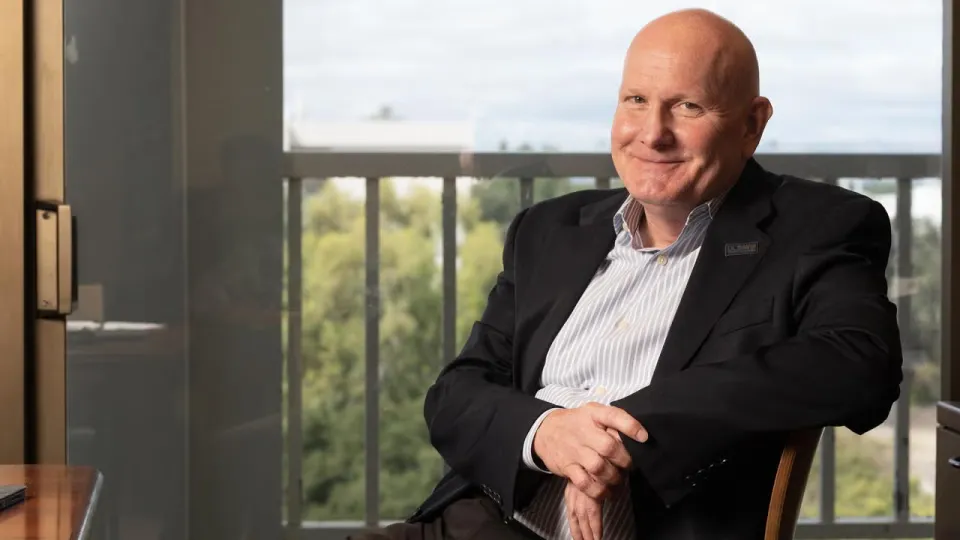
Karl Engelbach MBA 90 started by making copies. Reading them helped him find a career.
As a UC Davis undergraduate, Engelbach took a work-study position at the California Postsecondary Education Commission. Curious about the materials he was photocopying, he began reading them and gradually became more involved in the organization’s work. That beginning led to a 20-year career in state higher education policy, followed by roles in government relations and university leadership, including serving as chief of staff to three UC Davis chancellors.
As he marks his retirement, Engelbach reflects on how his UC Davis MBA prepared him to bring people together, navigate competing priorities and help others succeed.
In this Q&A, he shares the lessons that lasted and why students don’t need their entire careers mapped out to move forward.
1. Why did you pursue an MBA, and what were you hoping to gain?
When I completed my undergraduate degree at UC Davis in 1988, I didn’t have a permanent job lined up or a clear career direction. Since I was already in the rhythm of attending classes and studying, continuing my education seemed like a natural next step.
I wanted to explore my interests in business, economics and finance. I was hoping to broaden my knowledge, develop new skills and perhaps discover opportunities I hadn’t previously considered.
That openness became a theme throughout my career. I certainly never imagined that pursuing an MBA would eventually lead me to a career in higher education policy and university leadership, much less to serving as chief of staff to three UC Davis chancellors.
2. Which MBA lesson have you relied on most? Can you share an example?
One of the most valuable lessons was learning to work effectively with people with different backgrounds, perspectives and working styles.
Team projects brought those differences into focus. Some classmates wanted to finish well ahead of schedule; others procrastinated or had different ideas about approaching an assignment. At the time, I sometimes found these experiences frustrating. But I eventually came to appreciate that learning how to navigate those differences was probably among the most important things the program was teaching us.
I later helped with the effort to transform California’s Cal Grant financial aid program into an entitlement program. That required building coalitions among legislators, state officials, higher education institutions and other stakeholders. No single person or organization could have accomplished it independently.
My work on Cal Grant reform reinforced a lesson from my UC Davis MBA: The ability to work effectively with others is every bit as important as the technical knowledge you bring to the table.
3. How have relationships with your MBA classmates influenced your career?
Several of us ended up working for the state of California shortly after graduating. We would get together regularly for lunch, talk about our work, share challenges we encountered and offer one another suggestions about how to approach particular situations.
As new professionals navigating our organizations, we found practical advice and reassurance in those conversations. What made those relationships particularly meaningful was that we could be candid with one another. We didn’t need to pretend that we had all the answers. We could acknowledge when something wasn’t going well and ask for advice.
My advice to current students would be to invest in relationships. Your classmates are not simply people you happen to be taking courses with. They can become an important professional network and source of friendship and support for decades to come.
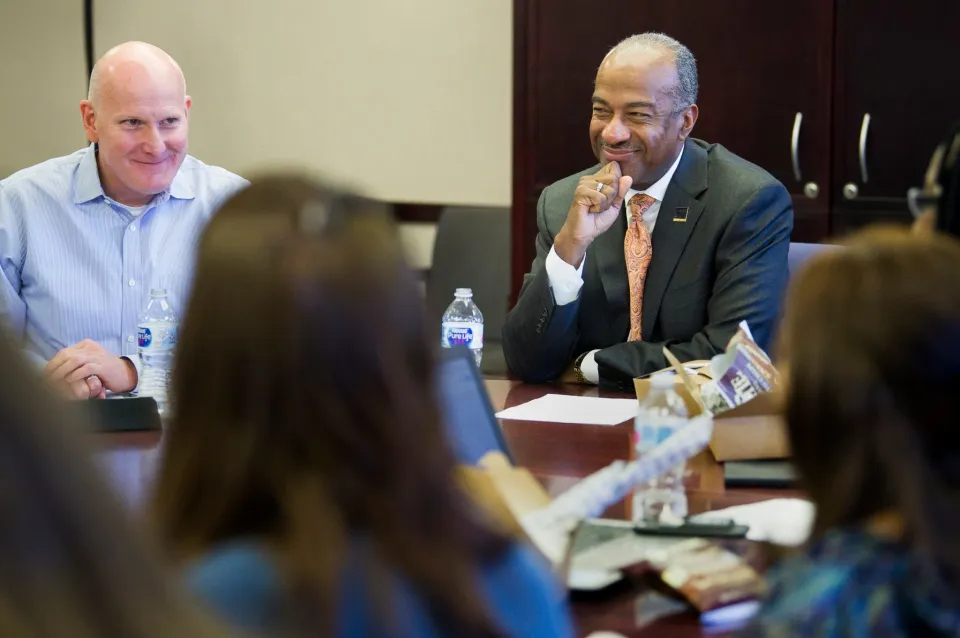
4. What did working with three chancellors teach you about adapting while staying true to your values?
Each chancellor brought a different personality, leadership style and approach to decision-making. One was highly analytical and information-driven. Another emphasized people and relationships. The third combined those perspectives.
None of these approaches was inherently better than the others. But each created opportunities for me to help ensure that important considerations weren’t overlooked.
With an analytical leader, I helped bring attention to a decision’s human dimensions—its effects on individuals, relationships, morale and the campus community. With a leader who emphasized relationships, I helped ensure that the data, operational considerations and longer-term implications were fully examined.
I’ve learned that being an effective adviser isn’t simply about adapting to how a leader prefers to work. It’s also about recognizing what that leader may not naturally emphasize and respectfully helping to fill those gaps.
While I’ve adapted my approach to different leaders and changing circumstances, my underlying philosophy has remained consistent: Leadership is about helping others succeed and creating an environment in which people feel respected, valued and empowered to contribute their best work.
5. What difficult experience changed how you lead?
One of the most consequential lessons of my career came from a situation in which I failed to speak up when I should have.
In November 2011, relatively early in my tenure as chief of staff to the chancellor, I witnessed campus police officers assembling in riot gear to remove protesters who had established an overnight encampment on the UC Davis Quad.
Seeing officers preparing to confront our students was deeply unsettling. But I was still relatively new in my position and uncertain about the boundaries of my authority. I wasn’t sure whether it was my place to question the approach, so I remained silent.
The confrontation that followed resulted in several students being pepper-sprayed, an incident that had profound consequences for the university and our community.
In hindsight, I wish I had listened to my instincts and spoken up. I don’t know whether expressing my concerns would have changed the outcome, but I do know that I should have raised them.
That experience fundamentally changed how I approach my responsibilities as a leader and adviser.
I’ve also learned that you don’t need to have a better solution fully developed before raising a concern. Sometimes asking the right question is enough to prompt others to reconsider their assumptions.
Speaking up is more than an act of personal courage. When you’re in a position of leadership or trust, it’s part of your responsibility to the people and institution you serve.
6. What advice would you give prospective students who are still figuring out their career direction?
There’s nothing wrong with not having a clearly defined career path. I certainly didn’t have one when I graduated from UC Davis and even after completing my MBA, I wasn’t entirely sure where my professional life would take me.
My advice is to remain curious, be open to new experiences and don’t be afraid to pursue opportunities that take you outside your comfort zone.
And if you’re uncertain about what to do next, ask for help.
Throughout my career, I’ve been amazed by how generous people can be with their time, advice and encouragement when you approach them with genuine curiosity and a willingness to learn.
You don’t need to have your entire career mapped out at graduation. In fact, being too rigidly committed to a particular plan might cause you to overlook opportunities that could ultimately prove far more rewarding.
My career certainly didn’t follow a straight line, but looking back, I wouldn’t have wanted it any other way.
Related content

A Business Degree with a Bigger Purpose
Chancellor Gary S. May connects career ambition with service and impact

Why I Chose UC Davis for Graduate Business School
Students highlight faculty, flexibility, industry immersions and community

Karl Engelbach Reflects on 4 Decades as an Aggie
MBA alum shares the leadership lessons that shaped an unexpected career