Whose Money, Whose Voice? Rethinking Sustainable Investing
How pension funds raise bigger questions about finance, leadership and the people behind investment decisions
Imagine you are contributing to a pension fund that will help support your retirement. You have a financial stake in its success. But how much say should you have in how that money is invested?
And what happens when your priorities differ from those of other members?
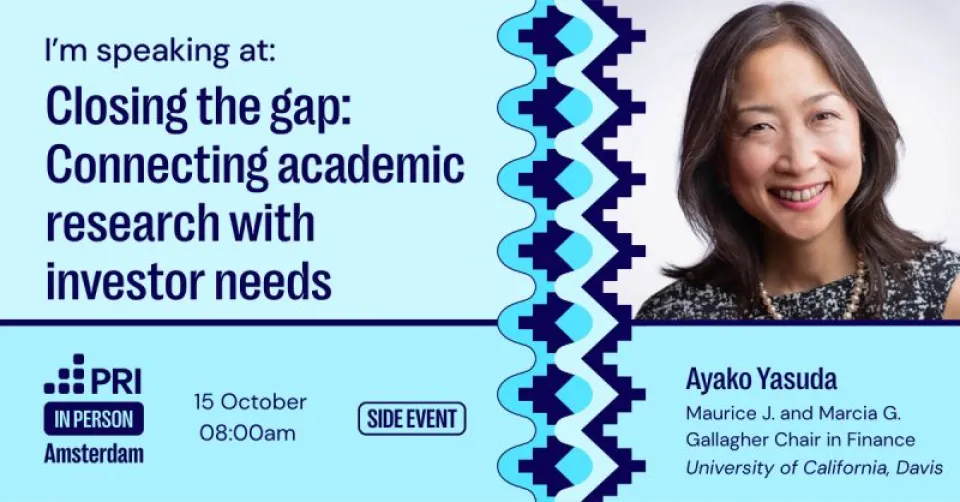
I recently explored these questions with fellow researchers and investment practitioners at PRI in Person 2026 in Amsterdam. For prospective business students, the discussion offers a look at how finance connects analytical decisions with people’s values and long-term needs.
Behind every investment decision are people whose futures may depend on it.
Who Gets a Say in Investment Decisions?
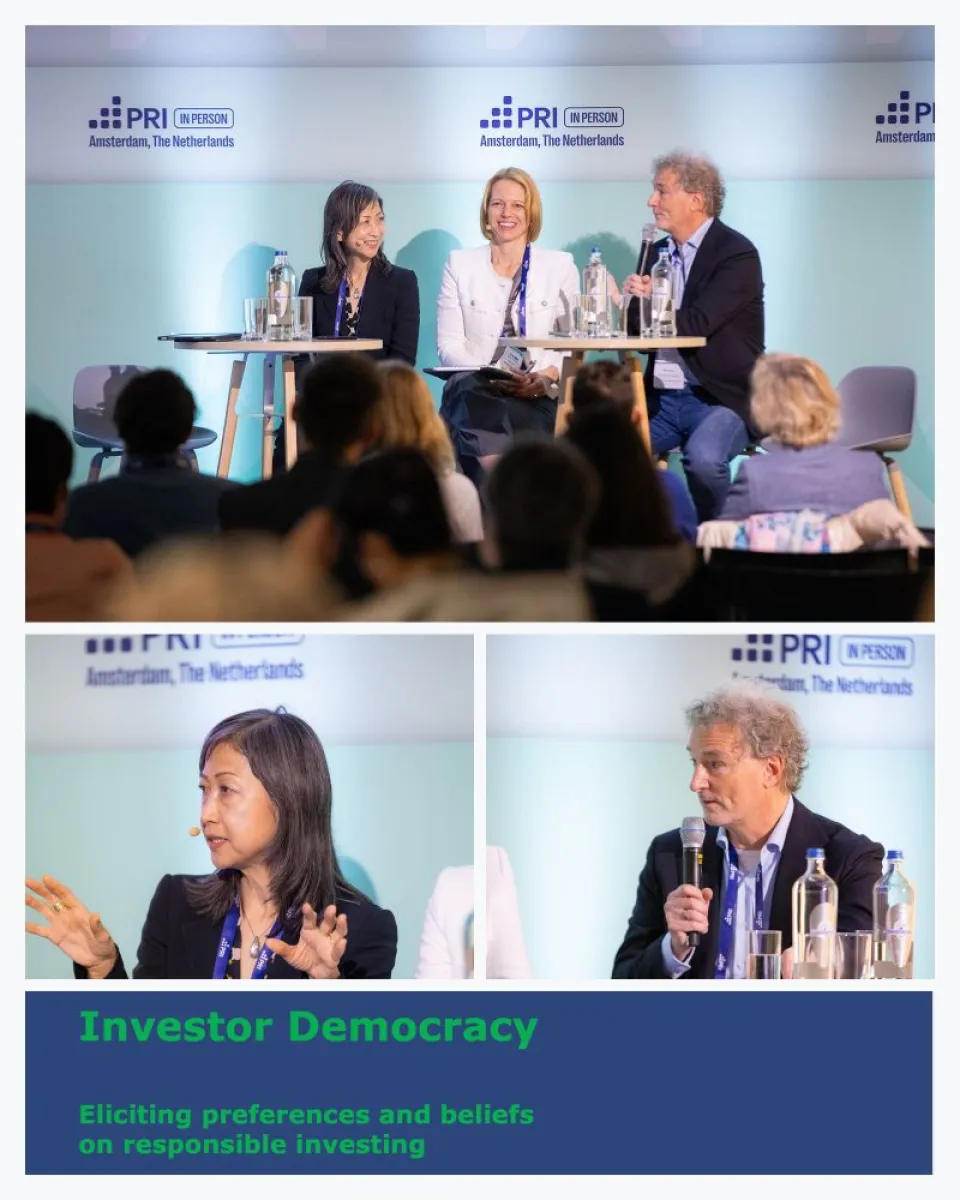
During the October session, “Closing the Gap: Connecting Academic Research with Investor Needs,” Barbara Zvan, president and CEO of University Pension Plan Ontario, and I served as discussants for the paper “Investor Democracy” by Rob Bauer, Emmeline Cooper, Bram van der Kroft and Paul Smeets.
Our conversation centered on how pension funds can give their members a meaningful voice in investment decisions.
How should funds balance financial returns with members’ diverse social preferences? Whose values should guide sustainable investing? And how should financial returns and sustainability outcomes be shared across generations?
Consider the different perspectives within a single pension fund. Someone approaching retirement may have different priorities and a different investment horizon from someone entering the workforce. Members may also disagree about which sustainability issues deserve attention.
How should pension funds balance financial returns with the different values and priorities of the people whose money they invest?
Though we did not always agree, that made the exchange all the more engaging. Bringing researchers and practitioners together creates opportunities to question assumptions and consider how academic ideas might work in practice.
Understanding How Climate Risk Affects a Business
The session also explored another important investment question: How does climate risk affect a company’s financial performance?
Marcin Kacperczyk presented research examining how the economic mechanisms linking climate risk to corporate cash flows determine which company characteristics best capture that exposure.
For a prospective business student, this is a useful distinction to consider. Identifying climate risk is one step. Understanding how it could affect a company’s operations, cash flows and value requires closer analysis.
That connection between a broad challenge and its financial implications is relevant whether you hope to evaluate investments, develop business strategy or lead an organization.
For more on the discussion, read Pedro Matos’s session recap, which includes links to the papers.
Connecting Research With the Decisions Ahead
At the UC Davis Graduate School of Management, I teach Technology Finance and Valuation, Venture Capital and the Finance of Innovation and Core Finance. My research interests include venture capital, private equity, institutional investing and sustainable finance.
Conversations like the one in Amsterdam bring academic research and investment practice closer together. They also show why studying finance involves learning to evaluate evidence, understand competing interests and ask better questions.
Studying finance involves learning to evaluate evidence, understand competing interests and ask better questions.
As you consider graduate business school, think about the decisions you want to be prepared to make. How will you assess risk? Whose interests will you need to understand? How will you weigh immediate priorities against outcomes that may take decades to emerge?
Behind every investment decision are people whose futures may depend on it. Understanding that connection gives the numbers their meaning.
Related content


Ideas in Conversation: Highlights from the 2026 UC Davis–FMA Napa Finance Conference
Top scholars shared research on fintech, personal finance, bonds and T-bills, innovation and patents

Why Sustainable Investing Cannot Be Everything at Once
Professor Ayako Yasuda: "Only 2% of sustainable funds actually pursue impact."