Learning to Lead When Strategy Changes
Lessons from a data-driven pivot in our Integrated Management Project

Midway through our MBA Integrated Management Project (IMP), my team reached a difficult realization. Through our analysis, we realized that the funding strategy we initially believed would be our strongest recommendation for the nonprofit client wasn’t supported by the data.
At the start of the project, we were asked to analyze institutional funding sources, including government grants, corporate social responsibility programs and foundations.
On paper, this approach made sense. But as we conducted interviews, reviewed philanthropy reports and analyzed recent funding trends, a different picture emerged. After significant federal funding cuts in 2025, many nonprofits were competing for the same limited pool of institutional dollars.
Our research showed what is often described as a red ocean scenario, with nonprofits competing in a crowded funding landscape for the same limited institutional dollars. As a result, there were fewer opportunities to stand out or secure sustainable support.
Serving as team lead meant focusing less on having the answers to this problem and more on creating the conditions for good work and innovative problem-solving to happen.
Learning Beyond My Comfort Zone
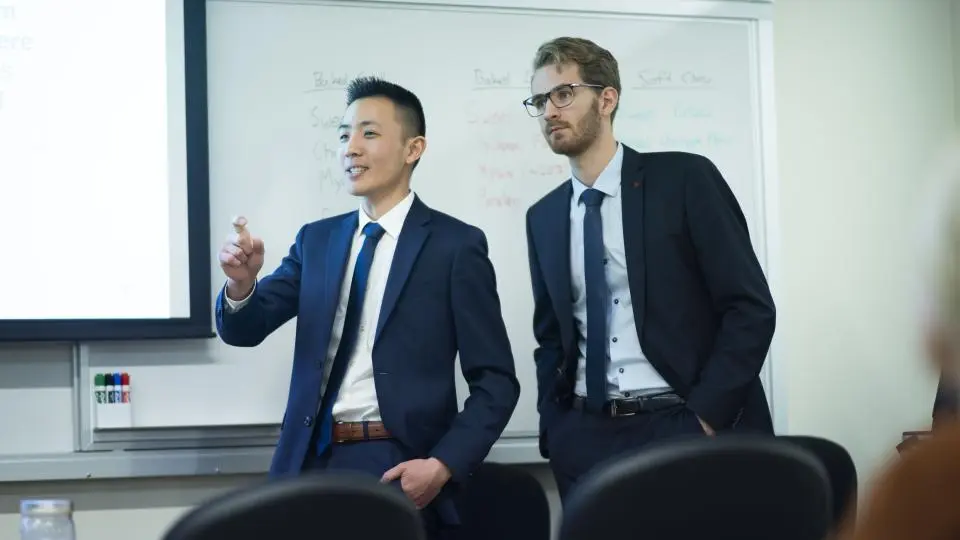
MBA Integrated Management Projects
Where business theory meets real-world IMPACT
- The IMP and + Articulation and Critical Thinking (IMPACT) is the cornerstone of the UC Davis MBA curriculum and literally brings your experience to life. In the 10-week IMP capstone, you team up to solve real business problems for companies, startups, nonprofits or UC partners. Guided by faculty advisors with industry experience, you’ll deliver actionable solutions backed by research and analysis.
Before starting the UC Davis Full-Time MBA program, my background was rooted in healthcare and community-based work. I was comfortable building relationships, working directly with people and contributing meaningfully on the ground. What I did not feel confident doing was translating that work into scalable programs or long-term systems.
Business wasn’t an area I felt especially comfortable in, which is part of what made the choice to pursue an MBA feel necessary. I saw it as a way to push myself beyond my comfort zone and build skills which would make me into a more effective leader.
UC Davis stood out to me because of its collaborative culture. From the beginning, learning felt driven by shared problem-solving rather than competition.
That environment mattered more than I realized at the time. Taking on a leadership role during IMP helped me become more comfortable asking questions, challenging assumptions and sitting with uncertainty as part of the process.
The IMP Challenge: Building Sustainable Funding
Our IMP partnered with The Schreiber Research Group (TSRG), a nonprofit focused on substance use prevention and systems-level change. Like many organizations in the Colorado nonprofit sector, TSRG was facing uncertainty due to government funding cuts and shifting philanthropic priorities.
Our task was to help them think strategically about diversifying their funding and strengthening long-term sustainability.
Over the course of the project, our work included:
- Researching how similar nonprofits are adapting to funding uncertainty
- Conducting interviews and reviewing recent philanthropy and funding reports
- Mapping the funding landscape and identifying opportunities
- Developing short- and long-term funding strategies
- Designing a customized individual donor strategy
- Refining marketing messaging and the organization’s value proposition
The challenge was not just producing these deliverables. It was deciding where to focus as new information continued to reshape the problem we were trying to solve.
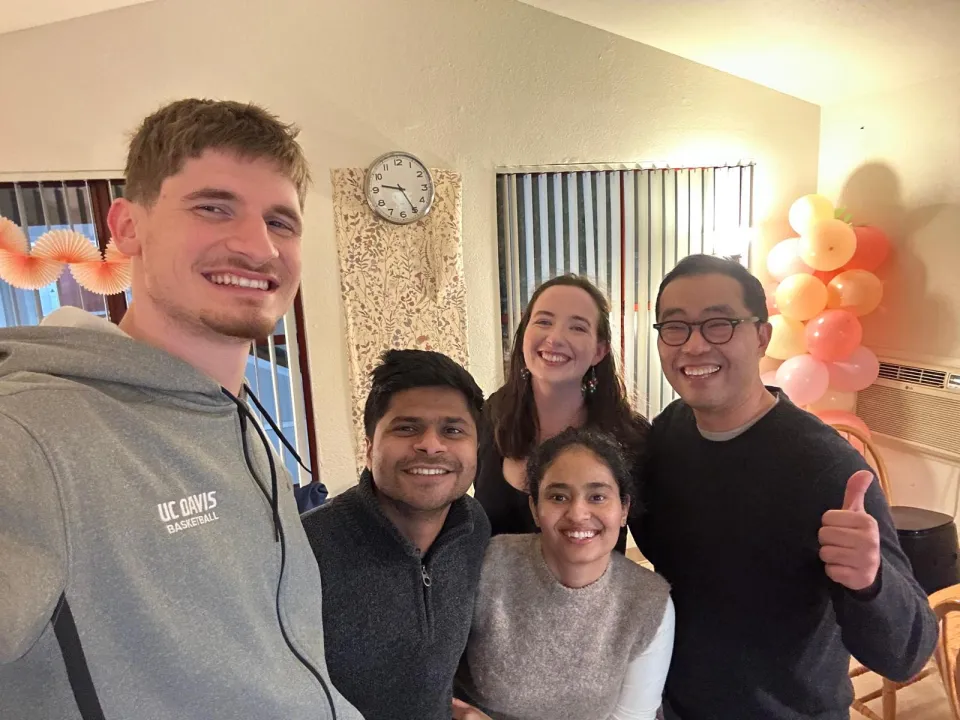
Our UC Davis Student Team Behind the Work
One of the most defining aspects of this project was the diversity of our team. Between us, we represented four different countries, spoke more than ten languages and brought backgrounds ranging from journalism and finance to marketing, research and professional athletics.
That diversity shaped how we approached the work and reinforced the importance of leading in a way that played to different strengths.
Each team member brought something unique that had an important impact on our recommendations:
- Niko Ročak led the donor research and strategy, with a strong instinct for making connections across ideas, stakeholders and opportunities that shaped how we thought about building meaningful donor relationships.
- Rajat Raj Jha served as the analytical backbone of the project, consistently elevating the rigor and quality of our work and ensuring our financial and analytical thinking held together.
- Jinwon Yoon anchored our market research, extracting clear insights from dense reports and datasets that grounded our recommendations in evidence.
- Shabdita Pareek led much of our interviews and marketing analysis, applying her writing and editing expertise to refine TSRG’s messaging across materials.
What stood out wasn’t just the range of skills on the team, but how those differences came together. By encouraging respectful debate and making space for quieter voices, we were able to turn different perspectives into recommendations that were both thoughtful and practical.
Following the Data
The turning point came when we acknowledged that our original assumption about prioritizing institutional funding no longer made sense. Continuing down that path would have been easier. It aligned with expectations and required fewer difficult conversations.
But it would have meant overlooking what the data was clearly telling us.
Instead, we recommended a hybrid strategy that combined short-term institutional funding with a longer-term plan to build an individual donor base, reflecting the client’s immediate constraints and future goals.
What I Will Carry Forward
This project reinforced that leadership isn’t about having everything figured out from the start. It’s about listening carefully, making space for different perspectives and staying open to change as the work unfolds.
I leave the IMP experience feeling more comfortable with adjusting course when new information emerges, asking for help when needed and supporting others in doing their best work.
Related content

MBAs Drive Rebrand for Tech Foundry, New Aggie Square Makerspace
“You don’t just learn about leadership at UC Davis—you step up and lead.”

Revolutionizing the $90B Global Sweetener Market
Our Part-Time MBA team delivers market insights for Oobli’s healthier innovation

The Business of Art: Enhancing Online Retail for SFMOMA
MBA students craft a digital growth strategy