I Managed Projects for Years. My MBA Taught Me to Lead People.
An engineer’s shift in mindset through leadership coursework and the Integrated Management Project

Before joining the UC Davis Full-Time MBA program, I worked in engineering consulting, leading infrastructure projects and managing clients.
On paper, I was progressing. In reality, I felt something was missing.
I met deadlines and client expectations, but I had limited opportunities to lead people with intention. I wanted to understand what motivates people, how decisions get made under pressure and how to support a team when the path forward isn’t clear.
I realized I wanted to shape cultures where people felt heard, accountable and empowered.
Leadership Is an Everyday Practice
I assumed leadership development in an MBA program would happen mostly through club roles or formal leadership titles.
What surprised me was how often leadership showed up in small, everyday moments like group discussions, constructive feedback, moments of conflict and even silence.
Leadership isn’t something we switch on, we practice it daily, whether or not we’re “in charge.”
Learning the Emotional Discipline of Leadership
Group work was another reality check. I intentionally partnered with different classmates across courses rather than defaulting to familiar personalities. That meant navigating different communication styles, work speeds and expectations.
It was uncomfortable at times, but it helped me to let go of the tendency to solve everything myself. Coming from an engineering background, I was used to thinking mostly analytically.
In business school, progress often came from diverse opinions and uncertainty. That shift from proving competence to fostering collaboration was not automatic. It required patience, humility and emotional discipline.
I also underestimated the emotional labor of leadership: Staying composed during disagreements, giving and receiving honest feedback and learning to separate ego from outcomes.
Learning to Coach Instead of Fix

One experience that reshaped my thinking was the Leader as a Coach class with Lecturer Doy Charnsupharindr. Instead of teaching us how to give advice, the class challenged us to reduce self-orientation and build trust intentionally.
We studied the trust equation (credibility, reliability and intimacy divided by self-orientation) and practiced what that meant in real situations.
I learned that listening is not waiting to speak.
We practiced tracking, inquiry, paying attention to tone, energy and non-verbal gestures, followed by playback with empathy. Instead of jumping to solutions, we asked curious, open-ended questions that helped others clarify their own priorities.
We were reminded to be fully present, being honest without judgment and open to outcomes rather than getting too attached.
This framework helped me approach conversations with classmates and colleagues differently. I focused more on helping others take ownership and accountability for their actions rather than solving problems for them. I try to lead by encouraging others to receive feedback with curiosity instead of being defensive.

What an Airline Maverick Taught Me About Leadership
Outside the classroom, I was also moved by a talk by UC Davis alumnus and airline maverick Maurice J. Gallagher, Jr., the chairman of Allegiant Travel Co.
Gallagher returned to campus for the Graduate School of Management (GSM) Dean’s Distinguished Speaker Series.
He reflected on his experience of navigating the airline industry through harsh economic cycles, uncertainty and disruption. He reinforced a key lesson on leadership: it requires patience and perseverance. He spoke about staying grounded, making disciplined decisions, maintaining credibility over time and not being reactive to challenges.
Where Theory Meets Pressure
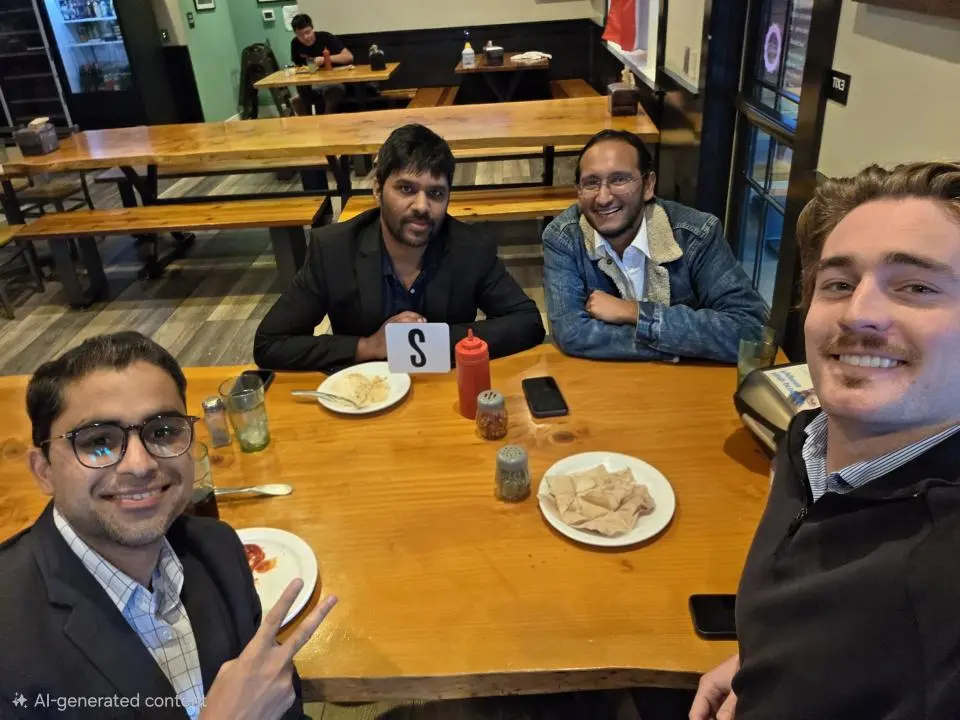
During the capstone MBA Integrated Management Project (IMP), I led a cross-functional team through a complex client engagement under tight deadlines.
The IMP is a 10-week consulting engagement where teams of up to five MBA students partner with a real organization to tackle a defined business challenge. Over the quarter, we invested more than 700 hours working closely with a faculty advisor and presenting iterative updates to the sponsor, incorporating their feedback as the project evolved.
Earlier in my career, I might have defaulted to assigning tasks and driving quick decisions. Instead, I focused on setting clear goals early, encouraging ownership and anchoring discussions about shared goals.
My experience that quarter felt different. I wasn’t trying to control the outcome. I was trying to guide the process. For me, that was the turning point.
The UC Davis Graduate School of Management is a strong fit for students who are curious and willing to stretch beyond their comfort zone.
If you are open to working with people who think differently than you and ready to receive feedback without immediately defending yourself, you will grow here.
For me, the transition from consulting to business school was both a career move, and an intentional shift in mindset. The GSM provided me with the space to practice leadership with humility and real intention.
Related content

From UC Davis to Airline Industry Maverick: A 40-year Journey
Maurice J. Gallagher, Jr. on leadership and aviation

Turning Ideas into IMPACT: Inside UC Davis MBA Integrated Management Projects
“One of the most hands-on, high-impact opportunities I’ve had during my MBA journey”

Learning to Lead When Strategy Changes
Lessons from a data-driven pivot in our Integrated Management Project